Earth Day
is every day.
Being green is just the Westlake way.
What you'll find here
- Programs — Composting, recycling, watershed work, pollinators, and how the city keeps waste out of landfills.
- Calculator — Estimate how much leaf humus fits your garden beds.
- Eco quiz — Five questions — get a Westlake-flavored eco card and tips.
- Events — Round-ups, shred days, and dates that matter.
- By the numbers — Impact in plain figures — leaves, time, and water.
- Contact — How to reach the Service Department and city hall.
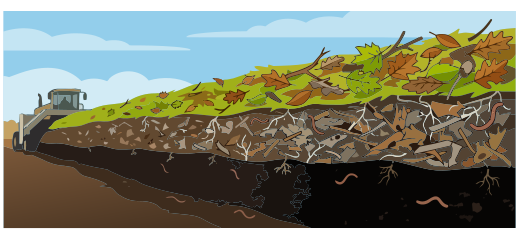
Leaf Humus Program
Every leaf we collect becomes soil again.
Diverts 50,000 cubic yards of organic waste from landfills each year. Decomposing leaves in landfills release methane — a greenhouse gas 25x more potent than CO₂. Turning them into humus instead locks carbon into the soil and builds healthier gardens across the city.
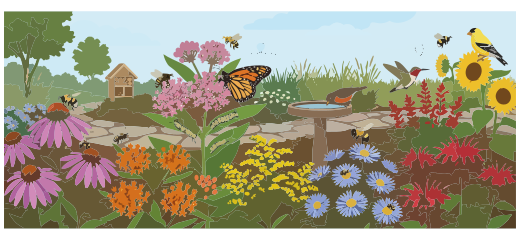
The Pollinator Project
A corridor of gardens, stitched across the city.
Native pollinators have declined by over 40% in North America. Westlake's pollinator gardens provide food and habitat for bees, butterflies, and beetles that pollinate roughly 75% of flowering plants — including most of what ends up on your dinner plate.
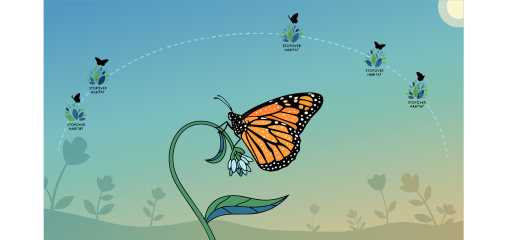
Mayors' Monarch Pledge
A signed promise to the butterflies.
Monarch populations have dropped by more than 80% in two decades, largely from lost milkweed habitat. Westlake's pledge through the National Wildlife Federation commits the city to expanding pollinator habitat across parks and municipal properties — creating stopover points along the monarch migration route.
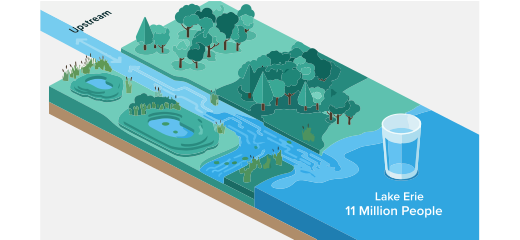
Watershed Management
Cahoon Creek. Porter Creek. Lake Erie.
Westlake is actively developing watershed management plans for the Cahoon Creek–Porter Creek system. Healthy creeks filter pollutants before they reach Lake Erie, which supplies drinking water to 11 million people across the region. Every decision upstream matters downstream.
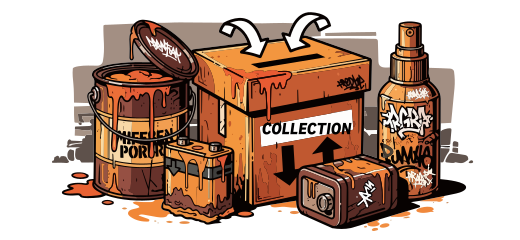
Household Hazardous Waste
Paint, pesticides, batteries — out of the drain.
HHW Round-Ups in May and September let residents safely dispose of chemicals that would otherwise end up in septic systems, storm drains, or regular trash. One gallon of improperly dumped motor oil can contaminate a million gallons of groundwater.

Computer Round-Up
Old electronics don't belong in landfills.
E-waste is the fastest growing waste stream in the world. Electronics contain lead, mercury, and cadmium that leach into groundwater when landfilled. They also contain recoverable gold, copper, and rare earth metals. Westlake's round-up keeps these out of the ground and back in circulation.
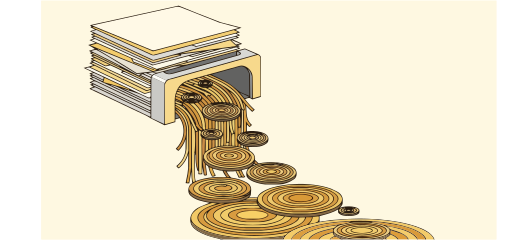
Shred-It Days
Identity safe. Trees saved.
Twice a year, residents shred sensitive documents on-site — the paper is then recycled rather than landfilled. Recycling one ton of paper saves 17 trees, 7,000 gallons of water, and keeps roughly 60 pounds of air pollutants from being released.
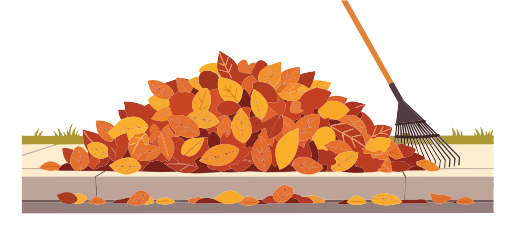
Curbside Leaf Collection
Rake to the curb. We'll take it from here.
The feeder program that makes the entire humus operation possible. Every fall, city crews collect leaves from every street — roughly 50,000 cubic yards — and deliver them directly to the windrows. What used to be "yard waste" becomes next spring's soil conditioner for gardens across Westlake.
How much humus
do you need?
Enter your garden's size. We'll handle the math. Leaf humus is a soil conditioner — not topsoil.
Pay at City Hall or schedule pickup at the Service Center — 741 Bassett Rd.
What's your eco path?
Five quick questions — no scoring anxiety. We'll suggest a Westlake-flavored persona and a couple of next steps that match how you already think about home, waste, and water.
Mark your
calendar.
On May 16, collection is 7:30am–12pm.
On Sept 18, collection is 7:30am–12pm.
What a year
of caring
looks like.
The numbers behind Westlake's eco programs — not talking points, just what's in the dirt.